Saturation of information, of opinions, of images; saturation of violence and manipulation. Saturation becomes oppressive. Social media, used as an escape and a showcase, has ended up becoming a prison. Decades pass and humanity grows ever more frenetic. Saturation becomes a plague, a virus that spares no one. We are all victims of this constraint.
However, there are points of escape, routes of departure, knots that break the homogenization and allow us to see other ways of doing things. Uniformity stops when a thread of another color appears, altering the twist and the shape.
Tapestry Saturation contemporary art
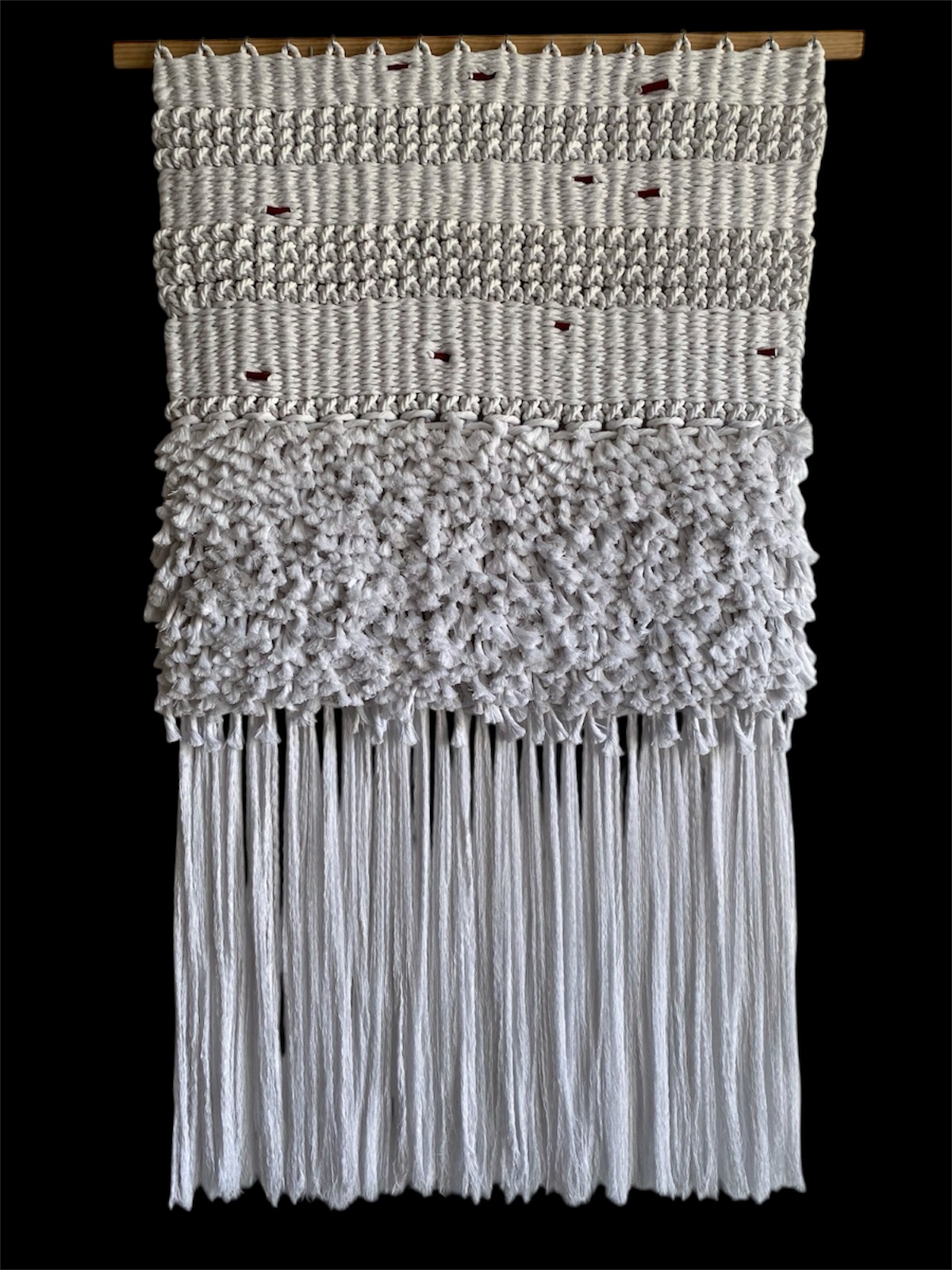
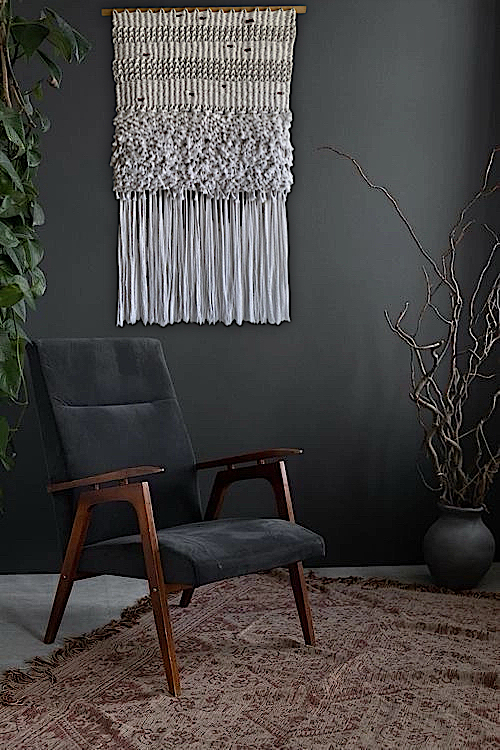
The tapestry Saturation is made with white cotton cords. It is a canvas waiting to be intervened upon, although the knots suggest otherwise: there is no space.
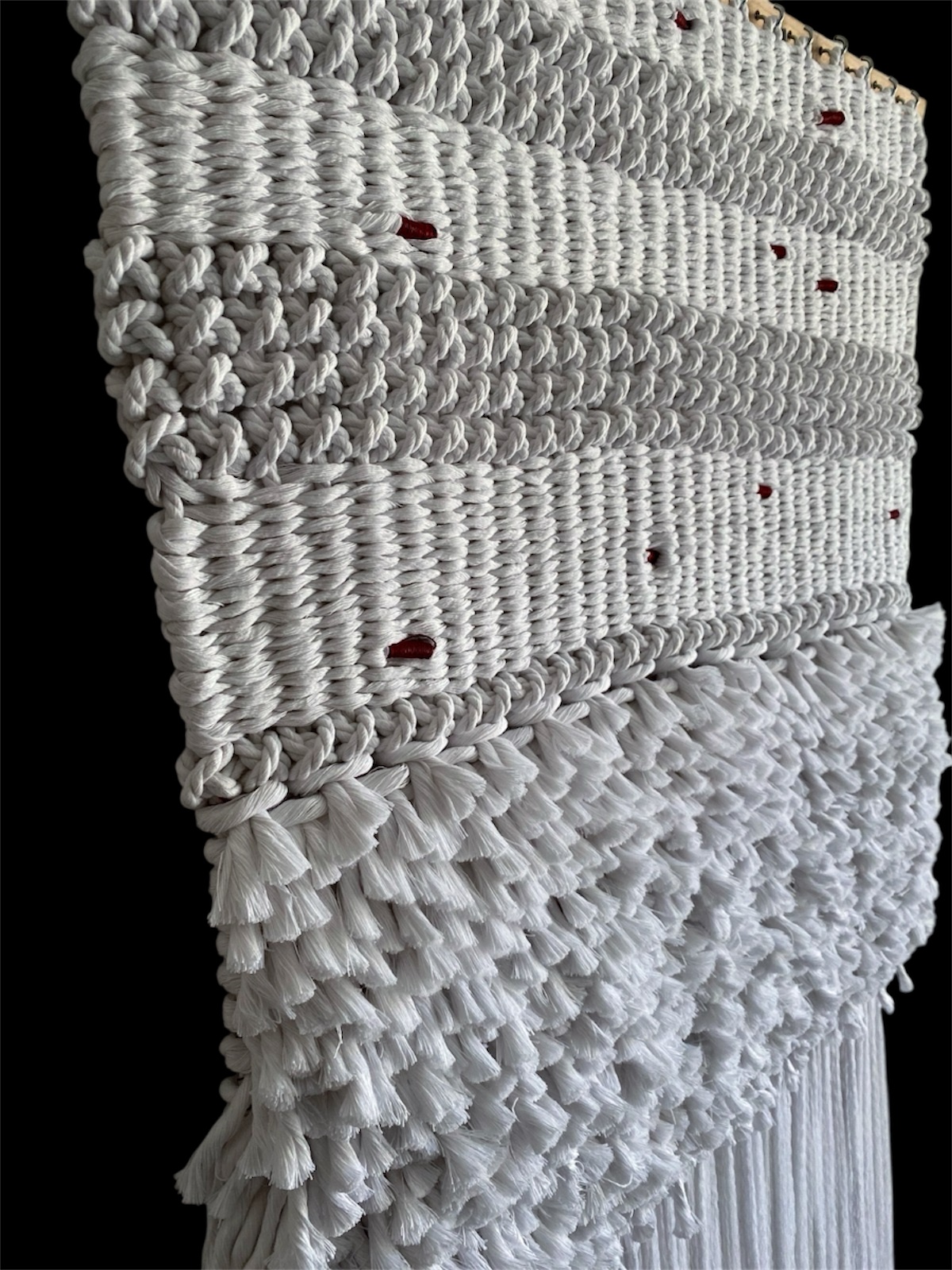
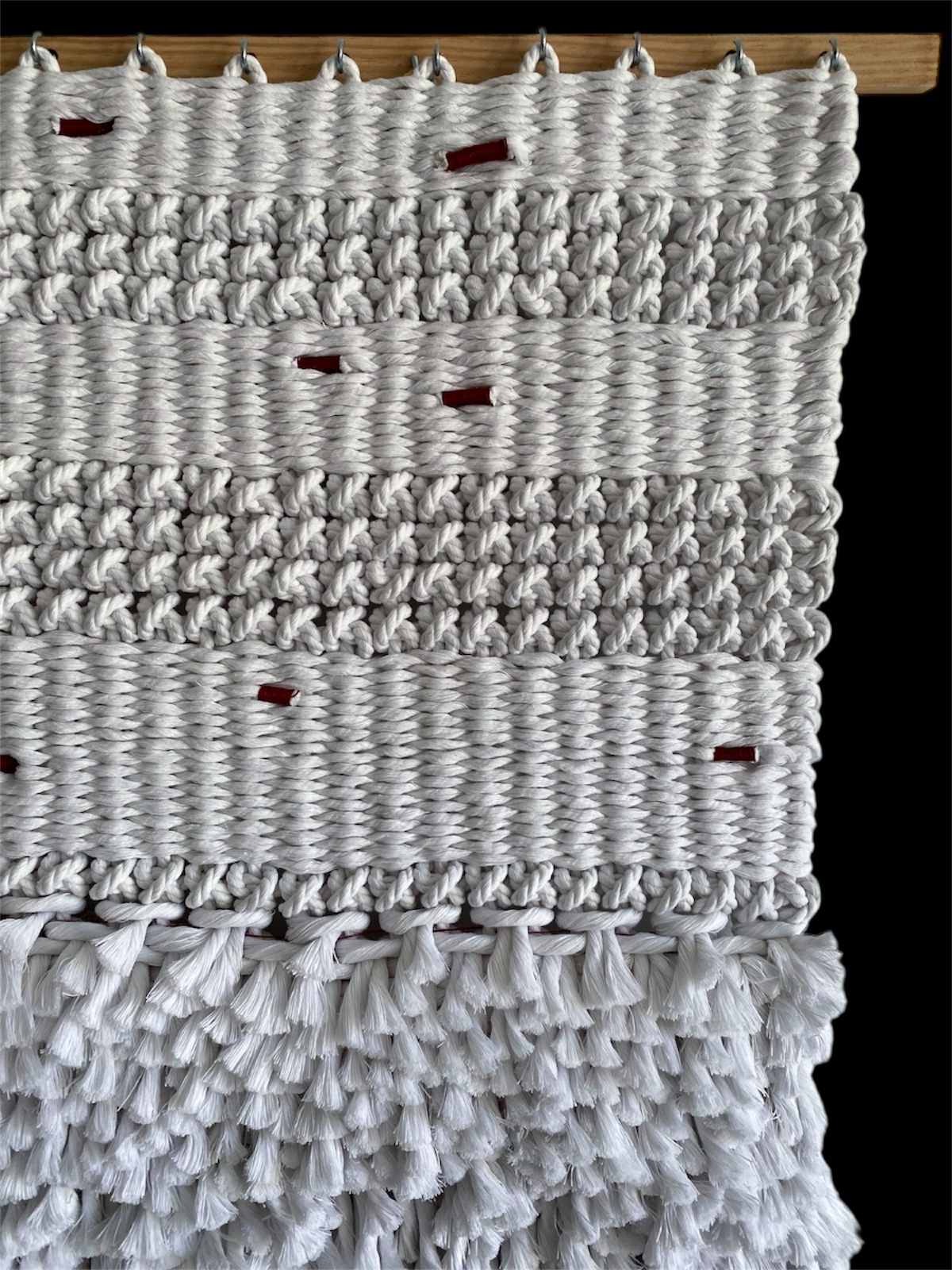
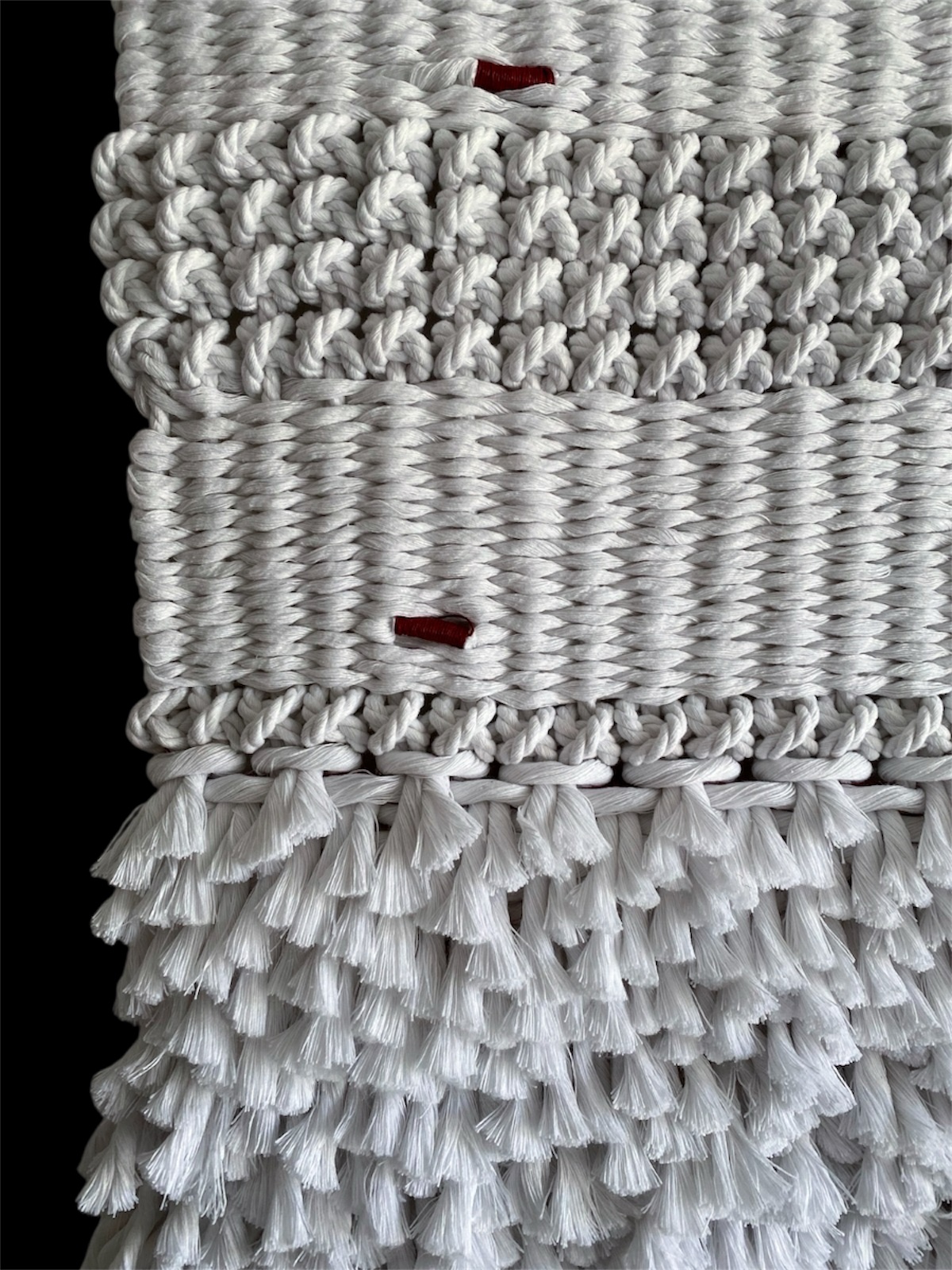
The weaving is a flat landscape where, suddenly, a common whipping knot appears, intended to conceal the fraying of the threads. The whipping is made with red paper cord so that it is clearly visible. Like a cry that reveals both the flaw and the possibility of resistance.
After the weaving, we have the constrictor knot, which tightens the warp threads to create relief. Like tiny soldiers, they line up in uniform rows, like masses that follow trends and end up all the same. The constrictor knot is useful when a firm joining knot is needed: if one end is pulled, the knot closes under its own tension. Therein lies both its risk and its virtue.
The final commotion arrives with the Turkish knot, enlarged with a 9 mm cord. Its shape is fully visible and discreetly supported by the same red paper thread. It conveys a soft, cushioned feeling, like that of an Oriental rug.
The Saturation tapestry has four knots of varying complexity. In the end, the most vulnerable threads are the fringes, exposed to the most extraordinary tangles.